España - Muchas Gracias
October 05, 2026 | ~12 mins read
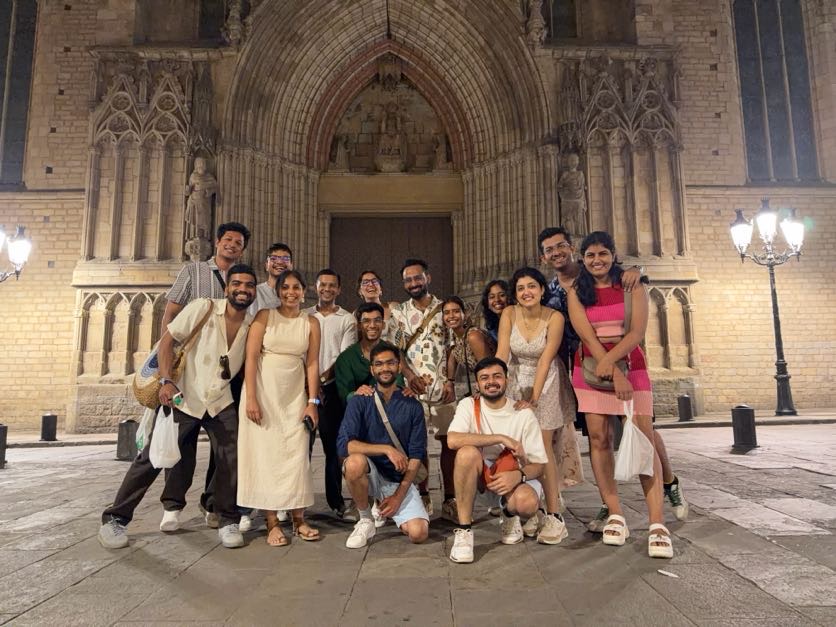
Three cities, and my first solo step outside home turf — a legendary trip through Barcelona, Valencia and Ibiza; My first international trip, taken alongside my jigar ka tukda group of college friends. What follows is a look at Spain through three lenses: the fundamentals that make the cities function, the city-level experiences that define each stop, and the cultural threads that meanders through all of them.
Fundamentals
Public Transport
Barcelona's public transport system is the backbone of getting around the city. The Barcelona Metro runs; it just does along with buses (including dedicated night buses) for public convenience. As a tourist I opted for individual tickets, which were fairly priced; however, what was remarkable was the cleanliness, lack of rush and civic sense displayed by the passengers. Additionally, the buses were cramping through the narrow lanes of Barcelona without blasting horns, announcements and a conductor screaming on the top of his lungs, all made possible by a high-trust society. The onus of buying a ticket rests on the individual, not the bus operator, which was a concept alien to my Indian mind.
Getting between cities is its own kind of transport experience. Spain's high-speed rail network connects Barcelona and Valencia in a few hours, and the FGC's regional lines also run north along the Costa Brava coast. However, Ibiza, by contrast, operates on its own logistical rhythm, especially once you're there: taxis, rental scooters and buses (including the well-known disco bus lines between resort areas) are the norm rather than a metro. I have observed GENZs dressed in drip waiting for a bus in line after parting till 5. The safety and comfort were initially unreasonable, yet comprehended in the background of European culture and trust, it makes sense. Why would a police car patrol in the early hours of dawn when the objective of crime has been minimised to a minor frequency.


City Planning
Barcelona's layout is a study in intentional design. Its Eixample district — the grid of wide, octagonal-cornered blocks north of the old city — was designed as a radical solution to the overcrowding of the mediaeval core, and it's still one of the most recognisable pieces of urban planning in the world. That mediaeval core, the Gothic Quarter, sits in deliberate contrast: narrow, winding lanes that predate any grid logic at all. Prohibition of automobiles in the city centre and encouraging pedestrian design with plazas, centre squares, close neighbourhoods, etc. has reinforced my belief that city is for people and not for cars. With varied options of locomotion, majorly public, the city gave a dreamy vibe filled with a freedom to roam and walk instead of being stuck in traffic and suffering.
Valencia's planning tells its own story. The city's Turia River was converted to nearly nine kilometres of the old riverbed into a continuous green corridor running through the heart of the city — a rare example of a natural disaster being turned into permanent public infrastructure. The park works as the central repository for all to come and partake in natural activities like running, fitness, and kids and pets playgrounds with ample free public services like water fountains, washrooms, and municipality-controlled eateries. The place is filled with small eateries, cafes, libraries, and churches nestled in the urban infrastructure. Walking the wide cobbled streets in the night, basking in the glow of amber streetlights, and shuttered down shops gave me a reminiscence of a cozy home where I lay overladen with blankets and hot soup while it rained torrentially outside. That feeling is in part contributed to the city's charm and partly credited to the Spanish culture.
Ibiza's old town, Dalt Vila, follows a different logic altogether: a fortified hilltop settlement, with its Renaissance-era walls built to withstand enemies, however still containing a large number of plazas and squares that act as a public space for all the residents. The old winding streets and small native homes combed between them, added with the cafes, and pubs and trees of old. It was everything that a city of old deserved; it also had the authority to preserve it.
Open/3rd Spaces
Across all three cities, the "third space" shows up in different forms. Barcelona has its plaças and the Parc de la Ciutadella near the old city; Valencia has the Turia Gardens, effectively a nine-kilometre linear park cutting across the entire city; and both Barcelona and Ibiza lean heavily on outdoor terraces and promenades as informal social infrastructure — places where café culture spills onto the street well into the evening. The restaurants are just kitchens, and the sitting is in the streets, and it was such a pleasant sight to observe public spaces being used as a common good for the public. The climate also helped, as the Mediterranean climate and torrential, yet short, rains allow the majority of the year to allow for such an arrangement. It is such a prominent arrangement that finding indoor sitting for a large group like ours was definitely challenging.


City
Architecture
Barcelona's architectural identity is inseparable from its roots, namely Antoni Gaudí and the Catalan Modernisme movement. The Sagrada Família, his best-known work, has been under construction since the 19th century and remains famously unfinished — making it, by some measures, the longest-running construction project of a major landmark in the world. Its interior is built around tree-like columns designed to mimic a forest canopy, letting light filter through in a way that's very different from a conventional cathedral. Meandering through the cathedral and understanding its historical significance, I stumbled across the section that explained the architect's vision and his inspiration from nature; namely a snails shell for the spiral staircase, leaves for the curved sections of roof, vines and branching trees, including various Catholic motifs.
The Gothic Quarter offers the architectural counterpoint: mediaeval stone buildings, remnants of Roman-era walls, and a cathedral dating back centuries, all compressed into a walkable maze near the waterfront. It was an amalgamation of old with new, where centuries-old cathedrals stand next to 7-Eleven, posing a juxtaposition to the observer.
Ibiza's Dalt Vila adds a third architectural register entirely comprising of thick Renaissance ramparts, whitewashed houses, and a cathedral at the summit with views across to the neighbouring island of Formentera. Cobbled roads stretching from narrow winding pathways barely a few feet wide, leading to archways and bridges and wide roads capable of handing 50 marching men abreast.
Night life
Barcelona's own nightlife scene, centred around areas like El Raval and Poble Sec, runs on a late schedule, though it's built more around a mix of live music venues and clubs than any single iconic address. I was unable to observe the majority of the club and party scenes; however, seeing partygoers late at midnight was suggestive of the lively nightlife. Ibiza was amazing in this, where hoards of skimpy-dressed partygoers were vibing to music and drugs at 5 in the morning.
Fashion and leisure
Barcelona's Passeig de Gràcia functions as its high-fashion spine, lined with both international flagship stores and Gaudí-designed buildings like Casa Batlló. The Gothic Quarter leans more boutique and independent; it's like Colaba Causeway but fancy with violin players in the corner.
The tall Spaniard women were confident, aesthetic and upright with a heavy air of self-importance which created a sense of inferiority in me initially. Being tall, slim and with long strides was the secret to looking beautiful even in the most basic of clothes. I carried the same advice and eventually switched to loose, beige clothes, AirPods in, and casually strolling in plaza-de-casa.
Ibiza's fashion identity runs in a different direction — flowing, beach-ready silhouettes and a bohemian aesthetic that traces back to the hippie communities that settled on the island from the 1960s onward, still visible today in its open-air markets by the shores.
Tourist attractions
The list of sights across this trip ranged from architectural landmarks to full-day excursions; here is a list of the few I witnessed:
-
Sagrada Família and Park Güell — both Gaudí works and both UNESCO World Heritage Sites, including Park Güell, the latter a hillside park of mosaic terraces and colonnades originally conceived as a private garden-city development that never fully materialised. Beautiful and dusty, filled with major natural elements. The park's mascot inspired the major antagonist of Scavengers Reign; hence, the visit was a happy surprise. 8/10
-
Camp Nou — FC Barcelona's home ground was a dream come true for us. Standing in the middle of the ground and shouting Messi! Messi! Messi! made my friends feel like a 10-year-old boy with joy and aspiration. Experiencing an immersive tour and museum with all the Ballon d'Or in full display transformed them back to their school days when football wasn't just a sport and Messi wasn't just a man. 9/10
-
A car ride along the Costa Brava — the rugged coastline north of Barcelona, known for its cliffs, coves and small fishing towns. The beautiful drive, paired with a lot of liquor and a stranger in an RV, old Spanish towns, music and runs on the beach. Climbing on a cliff for a view of the sunset and scaring ducks of the town, everything screamed of love and freedom. 9/10
-
Valencia — a full city in its own right within the itinerary, anchored by its historic centre and the futuristic City of Arts and Sciences complex. A place of expensive coffee and a large park in the middle of the city. 7/10
-
Running through the Turia Gardens — Valencia's converted riverbed park, which includes a dedicated running track along nearly its entire 8.5 km length, alongside cycling paths and sports facilities. 9/10
-
Skydiving — a must do; I did it at Requena Skydiving, and the guide, instructor and the staff were really helpful. Spurt in the midst of vineyards and the old town of Requena, the jump from ~11000 feet paired with the beautiful scenery and an adventurous instructor pumped my blood all the way up and gave me a huge adrenaline rush. I would definitely do this again and again. 10/10
Old Town of Ibiza — Dalt Vila (Acropolis and Necropolis)
Dalt Vila, Ibiza's fortified old town, sits on a hill overlooking the harbour and is part of the broader "Ibiza, Biodiversity and Culture" UNESCO World Heritage Site, inscribed in 1999. Its Renaissance walls and hilltop cathedral give it something of an acropolis-like character — a raised, walled citadel above the modern town. A short distance away lies its necropolis counterpart: the Puig des Molins, the largest Punic burial ground in the Mediterranean, established at the end of the 7th century BC and containing an estimated several thousand underground tombs, a few hundred of which are open to visitors. I observed the graves and found the remnants of the bodies long forgotten in the yet preserved. Ibiza is really a baffling place, with graves next to supermarkets.

Culture
Food
Food across the three cities reflects distinct regional identities rather than one uniform "Spanish cuisine". Barcelona is known for pan con tomate, seafood-forward tapas, and a strong Mediterranean diet base. A typical dinner consists of tapas and a couple of glasses of wine or aperol spritz.
Valencia is, notably, the birthplace of paella — a biryani with whatever meat a Spaniar can get his hands on — including snail, rabbit, mulluscus & anything from the sea; becoming a national and international symbol of Spanish food. Ibiza's food culture leans further into fresh seafood and simple Mediterranean preparations, shaped by its smaller, more coastal economy.
Cafés are aplenty, and Italian, French cuisine is easy to find. However, it can be a problem for vegetarians to find good food options, and they may have to revert to packed food for survival (looking at you, PJ). I would have a cortado and an omlette for breakfast mixed with some dry fruits and enjoy a heavy lunch and dinner. Additionally, the occasional nicotine patch and a sip of americano helped a lot to satiate the hunger.
Public places and family-oriented activities
All three cities carry a strong current of family-oriented public life. Valencia's Turia Gardens include a playground shaped like a giant sleeping Gulliver, along with sports courts and open lawns used for everything from football to picnics. Additionally, the parks, plazas and squares littered all over the city create an atmosphere of cultural solidarity and family cohesiveness. Barcelona's Parc de la Ciutadella functions similarly, with a boating lake, the city zoo, and wide green spaces.

Safety and fitness
Spain is generally regarded as one of the safer countries in Europe for travellers, with well-lit, walkable city centres in Barcelona and Valencia in particular. Policia cars patrolling the streets ever so often and approachable policemen made the place feel safe. Fitness culture is visible in daily life rather than confined to gyms — the Turia Gardens' running track sees regular use by locals, and both Barcelona's waterfront and Ibiza's coastal paths are popular for walking, running and cycling. I was intimidated by the able-bodied men and women; it must be something in the food, or the copious amount of cigarettes they smoke must help with the weight loss.
Beaches
Each city offered a different beach experience. Barcelona's Platja de Can Villar along the Costa Brava is the classic outskirt beach — walkable from the old town and sparcely lined with restaurants. Ibiza's beaches are more varied: Platja d'en Bossa is the island's longest beach and doubles as its clubbing hub, while quieter coves like Cala Comte and Sant Antoni and the protected dunes of Ses Salines represent the calmer end of the island's coastline.

Party in Ibiza: Pacha and Glitterbox
Ibiza's clubbing culture has two anchor points worth calling out specifically. Pacha, dating back to 1973 on the island (and 1967 in its original Sitges location), remains the island's most recognisable club brand, still known for long-running resident nights such as "Flower Power," a callback to the hippie era that first put Ibiza on the map. Glitterbox, a disco-and-house party concept, launched on the island in 2013 and has been based at Hï Ibiza since 2017, where it now runs as one of the club's flagship weekly nights — known for its maximalist, sequin-heavy atmosphere and a lineup built around veteran house and disco DJs.